Switching to the FIPS policy doesn’t guarantee compliance with the FIPS one hundred forty commonplace. You additionally must re-generate all cryptographic keys after you set the system to FIPS mode. The output of the ssh -Q command will not take into accounts the configuration modifications that will have been made. It can not due to this fact be used to test the crypto configuration modifications. It is a conservative safety stage that’s believed to withstand any near-term future assaults. If you have numerous servers affected by the identical vulnerability, you’ll have the ability to easily apply the suggested fix utilizing Ansible.
Ssh Weak Message Authentication Code (hmac) Algorithms:
They could be enabled solely by express configuration of particular person applications. In this tutorial, we’ll quickly take a look at how to disable weak SSH algorithms on RHEL 8/9/10, including SHA-1 HMACs, SHA-1 key exchange strategies, CBC ciphers, and 3DES encryption. These algorithms are considered outdated and insecure by trendy cryptographic requirements, and leaving them enabled can expose your methods to potential vulnerabilities. You might have already hardened your SSH configuration by disabling weak algorithms instantly in /etc/ssh/sshd_config. Nevertheless, if you’re working RHEL eight, 9, or 10, those modifications will not be taking effect and your system might still be using outdated or weak cryptographic algorithms, hence constant flags by Rapid7 scanner or any safety scanner.
Whereas in the past we did not disable algorithms in a constant way (different applications utilized different policies), today we’ve a system-wide coverage which is adopted by all RHEL crypto core components. These policies allow us to constantly deal with and deprecate algorithms system-wide. Decisions about coverage contents are based on paperwork like RFC 7457 which gives a list of assaults taking advantage of legacy crypto algorithms. You can even remove a symlink related to your application from the /etc/crypto-policies/back-ends directory and exchange it along with your personalized cryptographic settings. This configuration prevents using system-wide cryptographic policies for purposes that use the excluded back end. These ciphersuites and protocols are available however disabled in all crypto policy levels.
Earlier Than diving into remediation, it’s essential to confirm whether the vulnerabilities, similar to those flagged in the Rapid7 report, truly exist in your environment. In our case, whereas we didn’t find 3DES or MD5 algorithms in use, we did affirm that HMAC-SHA1 was nonetheless active, which was flagged as a weak algorithm. Which will record all of the configuration options, together with the chosen values forthe Ciphers, MACs, HostKeyAlgorithms andKexAlgorithms parameters. You can use the idea of scoped policies and the option of using wildcards in RHEL eight.5 and newer.
This might trigger in a security scan of the SSL Visibility Home Equipment. There can be a danger that these deprecated ciphers could put an appliance out of compliance. Here are some examples of how the cryptographic algorithms could be selected in OpenSSH. You can verify the SSH connection to see what algorithms are being negotiated after hardening. This modular method presents a versatile way to harden cryptographic habits without modifying the bottom coverage directly, and it integrates cleanly with the system’s present crypto-policies framework. To see what algorithms are negotiated during actual connections, you probably can try to ssh the server both domestically or from another distant system, enabling debug on the connection.
Algorithm Configuration Basic Rules
If your vulnerability reports have flagged these, you should explicitly take away them from your crypto-policy setup. From our findings, after making use of the SSH hardening policies, a re-analysis of the SSH algorithm negotiation above exhibits that only sturdy algorithms are now being supplied. Particularly, we no longer see weak algorithms such as hmac-sha1 or diffie-hellman-group14-sha1 in the list. As An Alternative, solely safe algorithms like curve25519-sha256, email protected, and hmac-sha2-256 are negotiated. As you’ll have the ability to see, the weak algorithms that had been current earlier than hardening have been efficiently eliminated.
Chapter Three Using System-wide Cryptographic Policies

The system-wide cryptographic insurance policies is a system element that configures the core cryptographic subsystems, masking the TLS, IPsec, SSH, DNSSec, and Kerberos protocols. It supplies a small set of policies, which the administrator can select. These ciphersuites and protocols are completely faraway from the core crypto libraries. They are either not present in any respect in the sources or their assist is disabled during the construct so it can’t be used by functions in any way. This ensures the SSH daemon picks up the updated cryptographic settings from the brand new policy. While CBC ciphers are eliminated, the presence of hmac-sha1 and email protected remains a security concern.
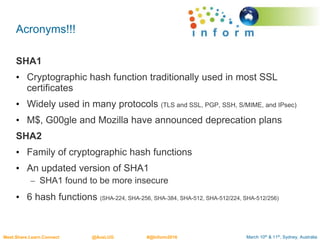
After applying crypto-policy changes or customizing your SSH configuration, it’s important to substantiate that the weak algorithms are now not accepted by the server. Without correct validation, vulnerable settings may silently persist, especially if policy modules or defaults weren’t applied as meant. Purple Hat allows directors to increase or modify system-wide cryptographic settings through the usage of customized coverage modules. These modules are easy text files that allow you to enable or disable specific cryptographic algorithms, tailored to your environment’s safety requirements. These flagged vulnerabilities remained regardless of explicitly configuring safe settings in /etc/ssh/sshd_config throughout our Red Hat techniques (RHEL 7, 8, and 9).
Install And Configure Snmp On Centos 8
An HMAC (Hash-based MAC) is a standard sort of MAC that makes use of a cryptographic hash operate (like SHA-1 or SHA-2) mixed with a shared secret key. Legacy methods or software program does not should help the extra fashionable and stricter algorithms and protocols enforced by the FUTURE policy. For instance, older techniques may not assist TLS 1.3 or larger key sizes. The fips-mode-setup device, which switches the RHEL system into FIPS mode, makes use of https://www.gardensanimalhospital.com/pet-anxiety-during-fireworks-storms/ this policy internally.
- You can use the crypto_policies RHEL system role to configure the FUTURE cryptographic policy on your managed nodes.
- Switching to the FIPS coverage does not guarantee compliance with the FIPS a hundred and forty standard.
- For a high level description of the change see this weblog submit and this kbase article.
- The output of the ssh -Q command won’t take into accounts the configuration changes that may have been made.
- By appending, you will automatically upgrade to the bestsupported algorithm when the server starts supporting it.
TheCVSS environmental rating is restricted to each customer’s surroundings andshould be outlined by the client to achieve a ultimate scoring. The version of the firmware ought to be checked after the replace toconfirm successful installation.